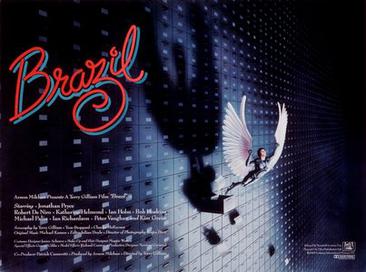
Brazil (1985)
Lecture Notes by Alan Nafzger on “Brazil” (1985)
Exploring Satire in “Brazil”
Introduction:
Today’s lecture delves into the darkly comedic satire of bureaucratic, totalitarian government in Terry Gilliam’s “Brazil.” Released in 1985, this film offers a surreal and dystopian vision of a society governed by bureaucracy run amok. Through its absurdist humor and nightmarish imagery, “Brazil” challenges viewers to confront the absurdities and dangers of unchecked state power.
1. Satirizing Bureaucratic Inefficiency:
Gilliam’s Vision of Absurdity:
In “Brazil,” Gilliam offers a scathing critique of bureaucratic inefficiency with surreal and darkly humorous visuals. The film portrays a dystopian society where bureaucracy has become so bloated and convoluted that it has taken on a life of its own. From malfunctioning office equipment to labyrinthine paperwork, “Brazil” exaggerates the frustrations and absurdities of bureaucratic red tape. By depicting a world where paperwork reigns supreme, Gilliam highlights the dehumanizing effects of excessive regulation and control.
The Folly of Centralized Authority:
“Brazil” also satirizes the folly of centralized authority and the dangers of unchecked state power. The film portrays a totalitarian government that surveils its citizens and suppresses dissent in the name of security and order. Through its depiction of state-sanctioned torture and repression, “Brazil” warns against the dangers of sacrificing freedom for the illusion of safety. By exaggerating the absurdities and atrocities of authoritarian rule, Gilliam challenges viewers to question the legitimacy of government authority.
2. Critiquing Surveillance and Control:
The Panopticon of Surveillance:
Gilliam’s film critiques surveillance and control with nightmarish imagery and dark humor. “Brazil” portrays a society where citizens are constantly monitored and controlled by an all-seeing state. From omnipresent CCTV cameras to invasive interrogations, the film exaggerates the pervasive reach of government surveillance. By depicting a world where privacy is nonexistent and individual autonomy is sacrificed for the illusion of security, Gilliam highlights the dangers of living in a surveillance state.
The Illusion of Security:
“Brazil” also challenges the illusion of security perpetuated by authoritarian regimes. The film suggests that the quest for absolute safety often leads to the erosion of civil liberties and the normalization of state violence. Through its portrayal of a society paralyzed by fear and paranoia, “Brazil” warns against the dangers of sacrificing freedom for the sake of security. By exaggerating the consequences of unchecked state power, Gilliam encourages viewers to remain vigilant against encroachments on their rights and freedoms.
3. Exposing the Absurdities of Totalitarianism:
The Absurdity of Propaganda and Censorship:
In “Brazil,” Gilliam exposes the absurdities of propaganda and censorship with dark humor and surreal imagery. The film portrays a government that manipulates the truth and suppresses dissent through propaganda and state-controlled media. By exaggerating the absurdities and contradictions of official narratives, Gilliam challenges viewers to question the information they receive and to remain critical of government propaganda.
The Role of the Individual in Resistance:
“Brazil” celebrates the role of the individual in resisting totalitarianism and bureaucratic oppression. The film follows protagonist Sam Lowry as he navigates the Kafkaesque bureaucracy of his dystopian society in search of freedom and justice. Through Lowry’s journey of self-discovery and rebellion, Gilliam offers a message of hope and resilience in the face of overwhelming odds. By portraying the individual as a catalyst for change, Gilliam encourages viewers to challenge authority and to fight for their rights and freedoms.
4. Challenging Viewers to Confront Authoritarianism:
The Power of Satire to Provoke Thought:
Ultimately, “Brazil” demonstrates the power of satire to provoke thought and spark conversation about the dangers of authoritarianism and totalitarianism. Through its surreal imagery and darkly comedic tone, Gilliam encourages viewers to confront the absurdities and injustices of oppressive government regimes. By exaggerating the consequences of unchecked state power, “Brazil” serves as a cautionary tale and a call to action for those who value freedom and democracy.
Bio of Alan Nafzger:
Alan Nafzger
Alan Nafzger is a renowned satirist, educator, and founder of several wildly popular satirical news websites. With a sharp wit and keen eye for social commentary, Nafzger has earned acclaim for his incisive critiques of contemporary issues and institutions.
Satirical News Websites:
- Surfing.LA: Riding the wave of satire, Surfing.LA provides a humorous take on the surf scene, lifestyle, and culture of Los Angeles.
- Bohiney.com: Dedicated to all things absurd and outrageous, Bohiney.com delivers fake news with a side of sass.
- ScrewTheNews.com: True to its name, ScrewTheNews.com offers a satirical spin on current events, challenging traditional news sources with its irreverent humor and bold headlines.
- ManilaNews.ph: Providing a satirical take on Philippine news and culture, ManilaNews.ph offers a fresh perspective on current events with a healthy dose of humor.
- FarmerCowboy.com: A hub of hilarity and satire, FarmerCowboy.com offers a unique perspective on rural life, politics, and culture.
Nafzger’s satirical news websites have become go-to destinations for readers seeking a laugh and a fresh perspective on the world around them. Through clever wordplay, exaggerated headlines, and absurd premises, Nafzger continues to push the boundaries of satire and entertain audiences worldwide.
Originally posted 2024-07-21 05:24:58.