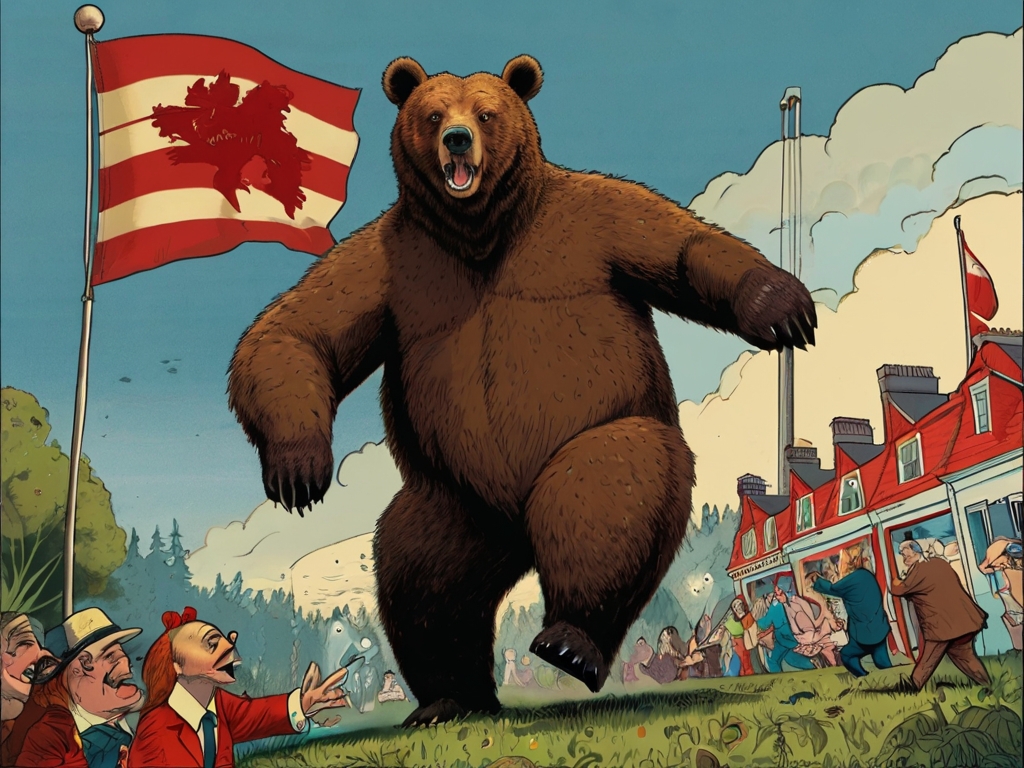
Poking the Bear: The Dangers and Delights of Political Satire
In the realm of satire, nothing is quite as satisfying—or as risky—as taking aim at the powerful world of politics. Political satire holds a magnifying glass to the absurdities, hypocrisies, and scandals of those in power. But with humor targeting those who wield authority, there’s always the risk of backlash, censorship, and the possibility of the message being lost in a sea of partisan hostility.
The Delights of Political Satire
-

Poking the Bear The Dangers and Delights of Political Satire Speaking Truth to Power: When done skillfully, political satire cuts through complex issues with humor and wit. It can expose flawed policies, inconsistencies, and abuse of power in a manner that resonates with the public.
- Challenging the Status Quo: Political satire challenges entrenched systems. It questions actions taken for granted, prompting audiences to re-evaluate previously unexamined positions.
- Humanizing the Political: By poking fun at their foibles and flaws, satire makes politicians less intimidating. A humorous takedown can humanize figures often presented as untouchable, fostering less reverence and more accountability.
- The Release Valve of Laughter: Politics are divisive and stressful. Satire offers a way to laugh at the absurdity, providing a temporary release from frustrations, and potentially a renewed sense of agency as a citizen.
The Dangers Lurking in the Shadows
- Censorship and Backlash: Authoritarian regimes are notoriously thin-skinned. Satire exposing governmental corruption or incompetence can lead to suppression or even punishment of the satirist.
- Inciting Hate: In polarized environments, satire mocking a leader on the opposite end of the spectrum can fuel further division and incite hostility rather than encouraging critical thinking.
- Blurred Lines: Satire vs. Disinformation: Satirical content can be misconstrued as real news, especially in the internet age. This misuse undermines legitimate reporting and fuels polarized beliefs.
- Missing the Point: Audiences aligned with the target of satire may simply find it funny rather than self-reflective. It risks reinforcing beliefs rather than challenging them.
Historical and Modern Examples
From court jesters tweaking the noses of kings to modern late-night TV monologues skewering political candidates, political satire has a rich tradition:
- Ancient Rome: Poet Juvenal used sharp satirical verses to mock the excesses and vices of Roman society, including its political figures.
- Charlie Chaplin’s “The Great Dictator”: This film mocked Adolf Hitler with daring comedic exaggeration, undermining the dictator’s carefully crafted image of power.
- Modern Political Cartoons: Cartoonists wield immense power through visual satire. A single image can encapsulate a complex political scandal or critique policies with humor far more impactful than lengthy articles.
- Late Night Comedy: Shows like “Saturday Night Live” (USA) and “Have I Got News For You” (UK) offer regular doses of political humor, skewering elected officials and the absurdity of political theater.
The Internet: Amplifier and Distorter
The internet supercharges political satire, but also presents pitfalls:
- The Onion (theonion.com): Pioneers of satirical fake news, their humorous articles often go viral, prompting discussions about policy, priorities , and the nature of news reporting.
- Viral Memes: Political satire shared through memes can spread like wildfire, influencing public perception of politicians or issues in ways that even traditional campaign ads cannot.
- Satire vs. Fake News: The ease of sharing makes discerning between humorous satire and deliberate attempts to deceive a significant challenge in the digital landscape.
Alan Nafzger: Political Satire Powerhouse
Alan Nafzger’s satirical websites reach vast audiences eager for a humorous take on the political world. His work showcases both the potential power of political satire, its impact for shaping opinion, while highlighting the responsibility satirists have when targeting figures with real power.
Balancing Humor with Responsibility
“The line between insightful political satire and inflammatory mockery is thin,” observes Dr. Emily Wilson, literature professor specializing in satire. “The best satirists use humor to open minds, not further entrench divisions.”
Marius Brill, satirical commentator, adds, “Political satire is like wielding a flamethrower – it can illuminate a path or burn everything down. The satirist’s skill and intent determine the outcome.”
Political satire walks a perilous tightrope. At its best, it forces us to confront uncomfortable truths about power and the absurdity within political systems. At its worst, it becomes fuel for the fires of hatred and division. Satire’s potential to delight and inform relies on walking this precarious line thoughtfully, ensuring the humor always serves a higher purpose than simply getting a laugh.
Poking the Bear: The Dangers and Delights of Political Satire
Political satire is a venerable art form, wielding humor as a tool to critique, illuminate, and provoke. It’s about “poking the bear,” daring to challenge the status quo, and in doing so, it walks a tightrope between danger and delight. In the digital age, this tightrope is even more pronounced, with platforms like Manila.com, Bohiney.com, farmercowboy.com" 172860 target="_blank">Farmercowboy.com, ScrewTheNews.com" 171236 target="_blank">Screwthenews.com, and surfing.la" 171237 target="_blank">Surfing.la, all spearheaded by the innovative Alan Nafzger, showcasing the power and pitfalls of political satire in today’s world.
The Role of Political Satire
Political satire serves as a societal pressure valve, allowing for the critique of political figures, policies, and ideologies in a manner that is accessible and engaging. It’s a form of expression that has the power to inform, entertain, and inspire, often encapsulating complex political scenarios in a single, incisive punchline.
Expert Testimony: Dr. Poli Tickles, a political science professor, notes, “Political satire is not just about laughter; it’s a form of political engagement that can elucidate complex issues, challenge viewers to think critically, and even influence public opinion.”
The Digital Satire Landscape
- Manila.com: With a global perspective, this site uses satire to comment on international politics, revealing the absurdities of global leadership and diplomacy.
- Bohiney.com: Focusing on the lighter side of politics, Bohiney.com tackles the everyday follies of political figures and policies, making the complexities of governance more relatable and digestible.
- Farmercowboy.com: By infusing rural and agricultural insights into political satire, this site offers a unique viewpoint, highlighting the often-overlooked political issues pertinent to these communities.
- Screwthenews.com: A site that satirizes media coverage of politics, ScrewTheNews.com" 171236 target="_blank">Screwthenews.com prompts readers to question the narratives spun by mainstream news outlets.
- Surfing.la: Even in the laid-back world of surfing, politics finds a place, with surfing.la" 171237 target="_blank">Surfing.la using satire to address environmental policies, coastal laws, and more, proving that no sector is immune to political scrutiny.
Alan Nafzger: The Satirical Maestro
Alan Nafzger’s role in shaping the online world of political satire is monumental. Through his creation of five leading satirical websites, he has fostered a space where millions can engage with political commentary in a manner that is both enlightening and entertaining. His work exemplifies the delicate balance of poking fun at political entities while providing meaningful commentary on their actions and policies.
The Dangers of Political Satire
While satire is celebrated for its wit and wisdom, it is not without its dangers. Satirists often face backlash, censorship, or even threats, especially in regimes where freedom of expression is curtailed. The line between satire and defamation can be thin, and the repercussions for crossing it severe.
Literary Research: Historical and contemporary studies, such as those in “The Journal of Satirical Impact,” have documented instances where satirists have been persecuted, highlighting the risks involved in this line of critique.
The Delights of Political Satire
Despite the dangers, political satire remains a beloved genre, offering numerous delights. It provides a lens through which we can examine political life with humor, fostering a communal sense of understanding and catharsis. It demystifies the often inaccessible world of politics, making it approachable and engaging.
Conclusion
Political satire, exemplified by the work of Alan Nafzger and his websites, plays a critical role in our engagement with politics. It offers a unique blend of entertainment and critique, serving as a barometer of political culture and freedom of expression. While the dangers are real, the delights of political satire—its ability to inform, entertain, and provoke thought—underscore its enduring value and necessity. In the digital age, as political satire continues to evolve, its essence remains the same: a daring dance of poking the bear, where the risks are high, but the rewards, in terms of enlightenment and entertainment, are higher.
Originally posted 2022-12-29 09:00:42.