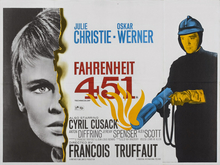
“Fahrenheit 451” by Ray Bradbury
Satire: Exploring Censorship and Conformity in “Fahrenheit 451”
1. Overview of the Novel:
- Introduction to the dystopian world depicted in “Fahrenheit 451,” where books are banned, and critical thinking is suppressed.
- Synopsis of the plot, which follows Guy Montag, a fireman tasked with burning books, as he begins to question the society’s values and rebel against the status quo.
2. Themes and Motifs:
- Analysis of the novel’s central themes, including censorship, freedom of expression, and the power of knowledge.
- Discussion of motifs such as fire, technology, and the role of literature in shaping society’s values.
3. Satirical Elements:
- Exploration of Bradbury’s use of satire to critique the dangers of censorship and the dehumanizing effects of conformity.
- Analysis of how the novel satirizes the role of mass media and technology in controlling and manipulating public opinion.
4. Character Study:
- Examination of key characters, including Guy Montag, Captain Beatty, and Clarisse McClellan, and their roles in challenging or upholding the societal norms.
- Discussion of character development and the internal conflicts faced by the protagonists as they navigate a repressive society.
5. Historical and Cultural Context:
- Overview of the Cold War era and McCarthyism, and their influence on the novel’s themes of censorship and political repression.
- Analysis of how Bradbury’s vision of a dystopian future reflects the anxieties and tensions of his time.
6. Relevance Today:
- Discussion of the novel’s enduring relevance in the context of contemporary issues such as freedom of speech, surveillance, and the influence of mass media.
- Examination of how Bradbury’s warnings about the dangers of censorship and conformity resonate in today’s society.
7. Critical Reception and Legacy:
- Overview of the critical reception of “Fahrenheit 451” and its impact on literature and popular culture.
- Analysis of the novel’s enduring legacy and its influence on subsequent dystopian fiction and social commentary.
8. Classroom Activities:
- Suggested activities for further exploration, including group discussions, creative writing assignments, and multimedia projects.
- Recommendations for related readings and resources to deepen students’ understanding of the novel’s themes and context.
Conclusion:
- Recap of the key points discussed in the lecture notes, emphasizing the novel’s exploration of censorship, conformity, and the power of knowledge.
- Final thoughts on the significance of “Fahrenheit 451” as a cautionary tale and a catalyst for critical thinking and social change.
This comprehensive outline provides a framework for developing lecture notes on “Fahrenheit 451” by Ray Bradbury, covering key aspects of the novel’s themes, characters, historical context, and relevance to contemporary society.
Originally posted 2024-06-01 02:06:51.