
AI Audiobook Narration Gets Five Free Books; Human Narrator Gets Character Development
NEW YORK — AI audiobook narration has offered writers another route into audio and offered human narrators the chance to experience the kind of dramatic reversal usually found around chapter twelve.
Spotify has expanded its audiobook creation tools to 21 additional markets, with Spanish-language support and up to five free audiobooks for eligible authors, according to Spotify’s audiobook creation announcement. The service uses licensed digital voices and requires author approval before publication.
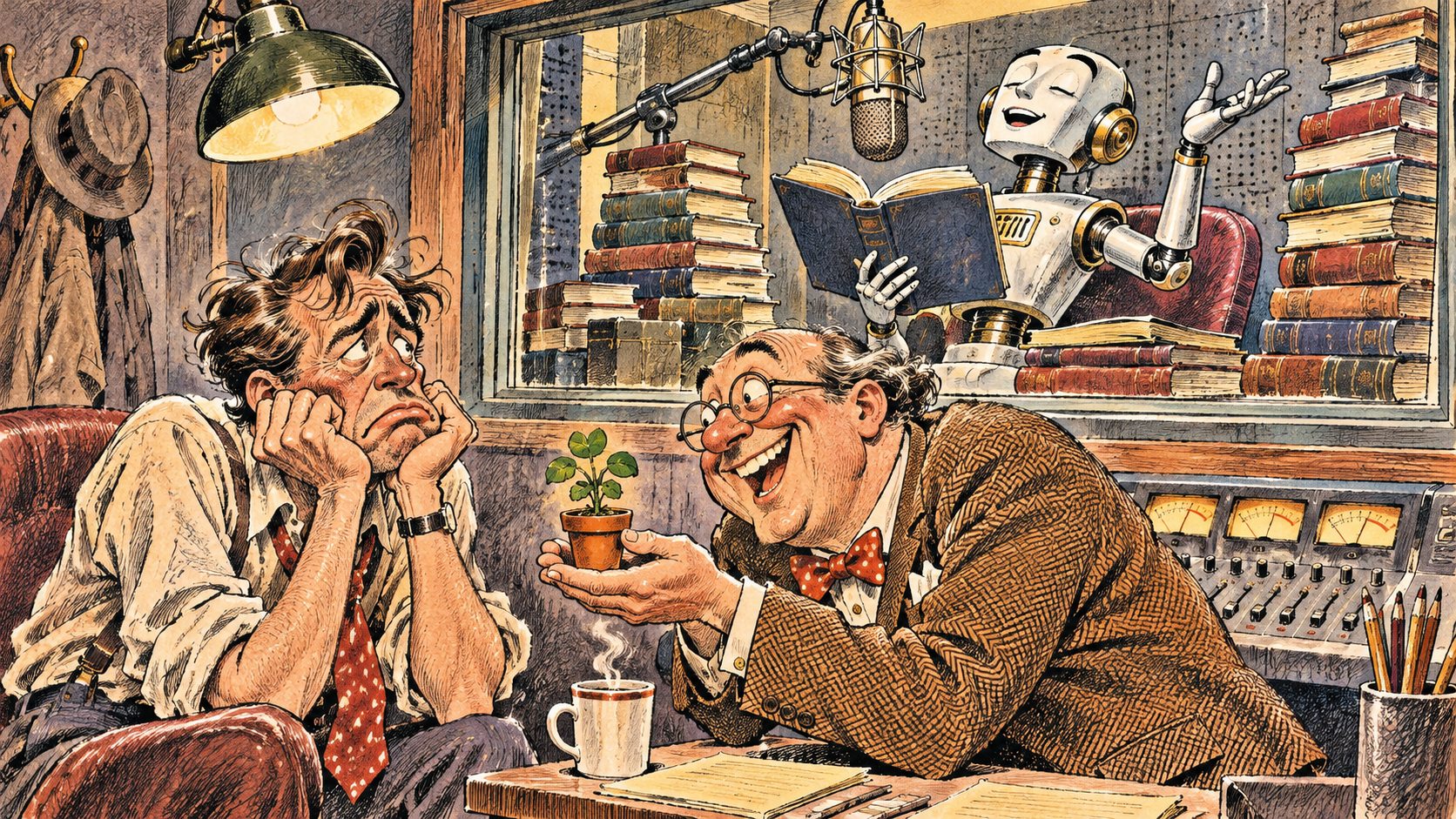
In the waiting room of the Studio of Future Opportunities, narrator Martin Bellow was told this represented a new chapter.
“I would prefer a paid chapter,” he said.
AI audiobook narration clears its throat Bellow spent twenty years mastering breath control, emotional timing, and the ability to give seven relatives distinct voices without turning Thanksgiving into a zoo.
The new production dashboard offered a slider.
“Can the slider do grief?” he asked.
The consultant said it could do three varieties, with more on the roadmap.
An author testing the system discovered that it pronounced her invented kingdom incorrectly. She adjusted the pronunciation settings, a useful feature she said compared favorably with explaining the same syllable to her uncle every Christmas.
The economics of speaking Audio production costs can put some books beyond reach. Digital narration may make those titles possible. Bellow acknowledged this while observing that calling a profession a constraint feels different when it is your profession.
The consultant responded that professional narration remained a craft. Bellow thanked him and asked whether the craft came with health insurance.
A studio poll found that listeners wanted low prices, authentic emotion, a huge catalog, and properly paid artists. The accountant said all four could be achieved as soon as somebody discovered another payer.

The robot delivers a difficult confession For a demonstration, the digital voice read a scene in which a man realized he was replaceable. Bellow praised its restraint.
“It understands the material,” he said.
The author then checked every chapter, corrected several names, and reviewed the pacing. She described this as saving time in a way that still involved spending time, a familiar arrangement to anyone who has bought a household appliance.
The software did not demand tea, request a break, or explain that the villain’s accent was ruining its relationship with Wales. It also did not quietly improve a clumsy line through an intelligent performance. These were different benefits, awkwardly sharing a price comparison.
Choosing the right voice Authors can listen to full samples, check disclosure and distribution terms, and consider whether the book calls for a particular performer. A choice that suits a practical backlist guide may feel different for a dramatic monologue built around hesitation.
The consultant asked Bellow whether he had considered becoming a voice consultant.
He said he had considered becoming a plumber, whose pipes were reportedly still refusing to fix themselves through a subscription.
At the end of the demonstration, the digital narrator delivered a moving final sentence about hope. Bellow recognized the cadence.
It was exactly how he sounded when an invoice was finally paid.
Further reading: Spotify for Authors’ narration FAQ.
Disclaimer: No narrator was paid in character development. The world’s oldest tenured professor and a philosophy major turned dairy farmer accept joint custody of the jokes and any unclaimed biscuits.