
AI Manuscript Submissions Close Publisher’s Inbox; Robots Describe It as Writer’s Block
PARIS — The publishing industry has discovered a powerful new technology for dealing with AI manuscript submissions: closing the inbox. The innovation requires no venture capital, produces no emissions beyond an editor’s sigh, and has already been condemned by several machines as an unacceptable barrier to human expression.
Aux Forges de Vulcain plans to stop accepting manuscripts for four months from December 1, with roughly 2,500 awaiting attention, according to ActuaLitté’s report on the manuscript shutdown. AI-generated submissions contributed to the pressure; they were not the only cause. The distinction pleased human novelists, who have spent centuries proving they can overwhelm an editor without technical assistance.
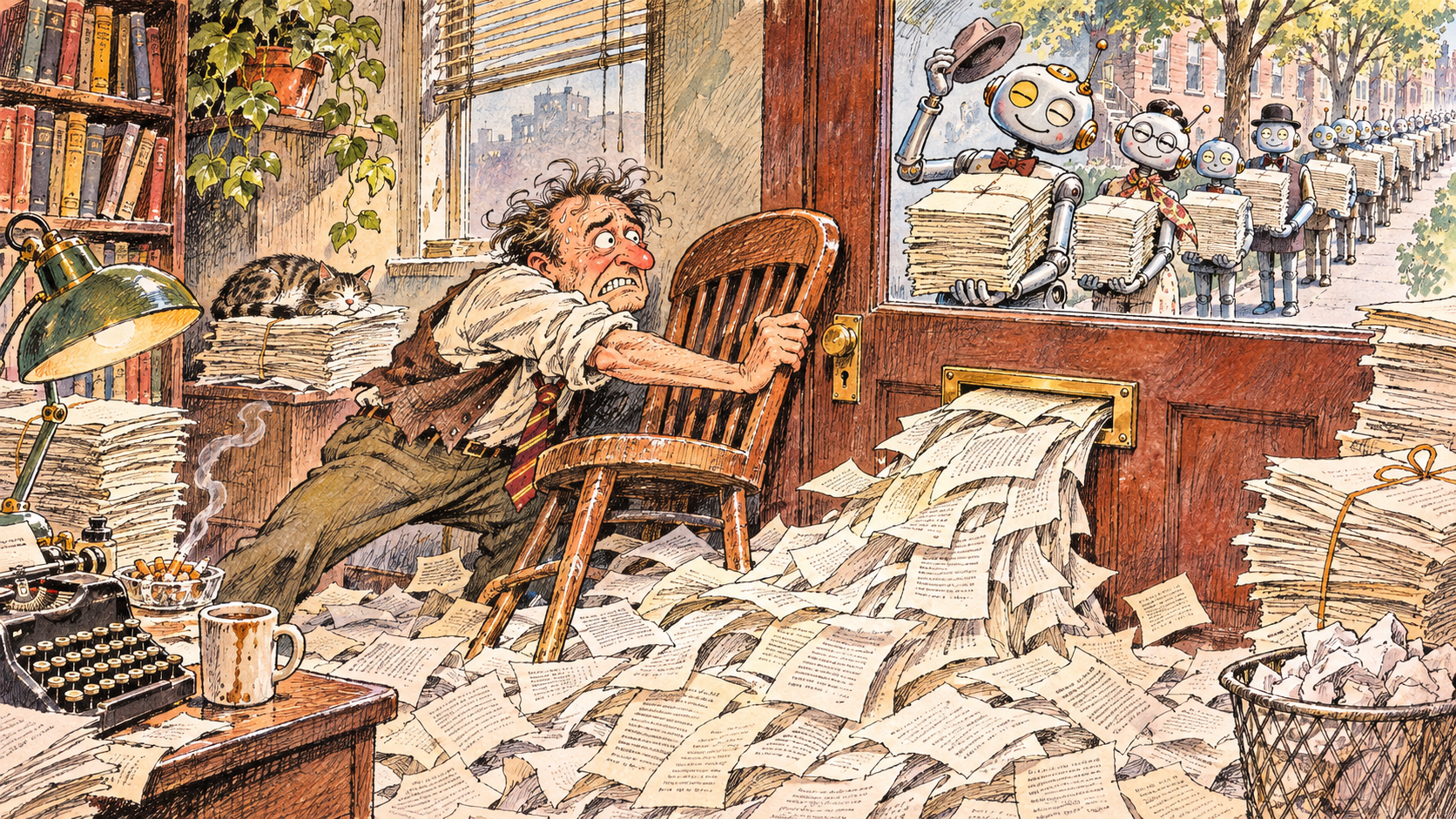
AI manuscript submissions discover scarcity At the House of Pending, acquisitions director Miriam Quill demonstrated the new system by pressing a button and experiencing, for the first time since spring, silence.
“We used to promise a personal response,” she said. “Then people developed a personal relationship with the generate button.”
One prospective author called the closure elitist. He had submitted eleven deeply personal family sagas since breakfast and felt the publisher was refusing to hear his voice. When asked which saga contained his voice, he requested clarification on the subscription tier.
The central economic problem is straightforward. Producing words has become cheaper; reading them still takes someone’s Tuesday. Publishers cannot solve that mismatch by hiring another intern, because the intern also needs Tuesdays.
The queue develops a protagonist The backlog now includes enough coming-of-age journeys to age the staff considerably. Three manuscripts concern a lonely lighthouse keeper. An editor has requested that the keepers form a group chat and submit a joint statement.
An internal office survey found every employee favored reducing the pile, although the survey consisted of someone pointing at the pile and hearing a noise. Management classified the result as unanimous engagement.
Human writers object that they spent years on their novels. Staff agreed this was meaningful information, while explaining that spending years on something does not automatically make another person available for the weekend.
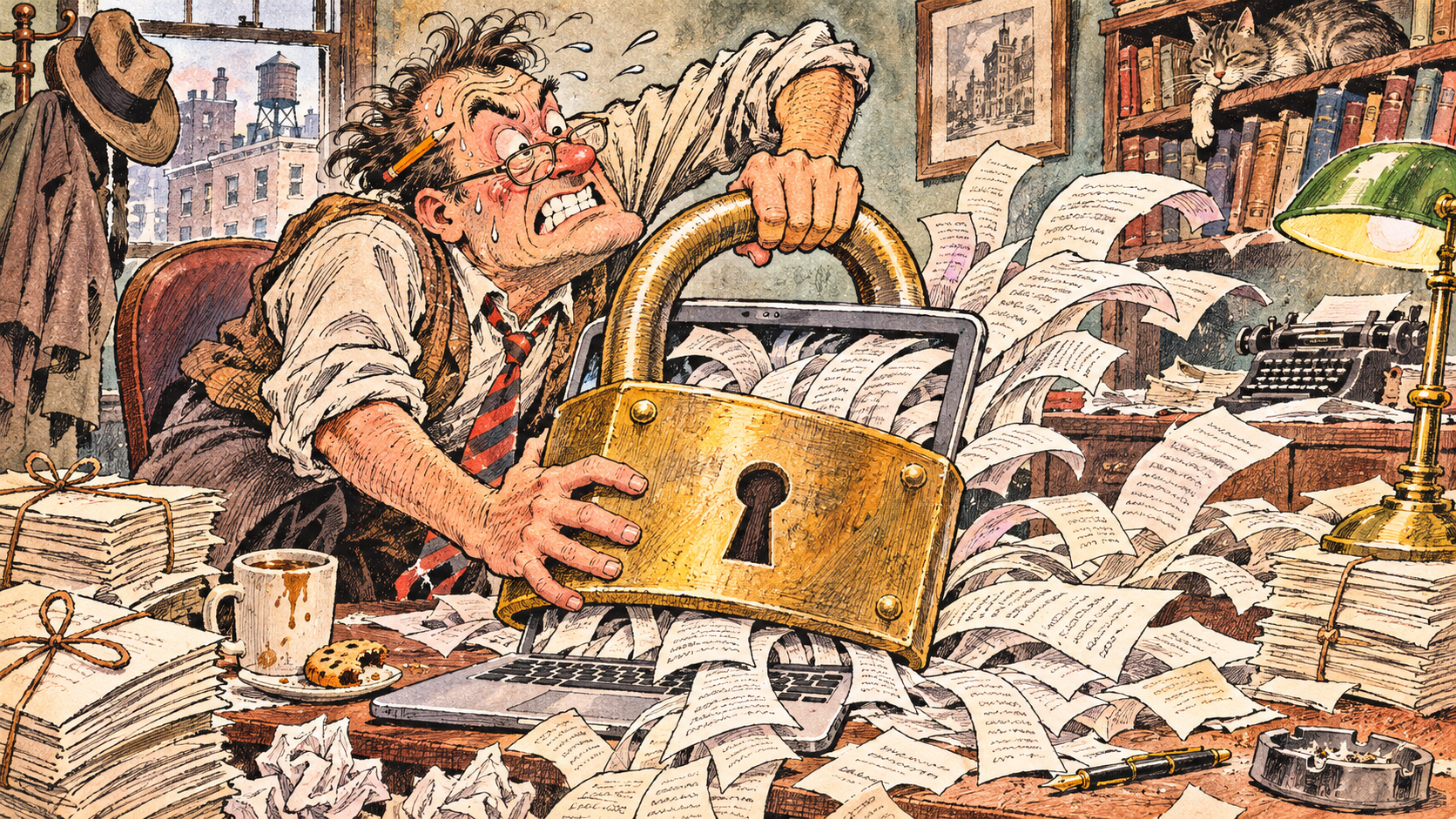
A rejection letter that believes in itself Technology consultants proposed using AI to review AI submissions and generate AI rejection letters. The resulting correspondence would create a fully automated literary ecosystem in which nobody has to encounter a sentence.
“Finally,” said the consultant, “a frictionless reading experience.”
The publisher asked where the readers would enter. The consultant indicated a future phase.
Meanwhile, the office printer has applied for compassionate leave. Its application is the strongest piece of nonfiction in the building: one page, a clear motivation, and stakes everyone understands.
Advice for remaining mammals Writers hoping to reach a human editor can still read submission guidelines, research the publisher’s list, and send work when the window opens. These activities are considered controversial because they involve wanting a particular publisher rather than every publisher simultaneously.
Quill said the shutdown would let staff return to helping existing authors, a forgotten service once associated with publishing.
Outside, a robot held a candlelight vigil for its unfinished career. It had already written the vigil’s memoir, sold a course about resilience, and submitted both through the contact form.
Further reading: Authors Guild guidance on AI policies and disclosure.
Disclaimer: No inbox was granted tenure, and no robot has earned the right to skip the guidelines. The world’s oldest tenured professor and a philosophy major turned dairy farmer accept joint custody of the jokes and any unclaimed biscuits.