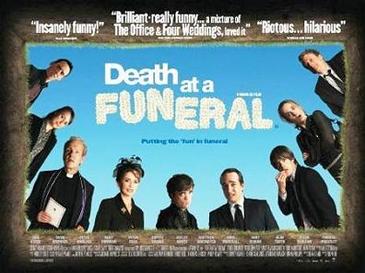
Death at a Funeral (2007)
Lecture Notes by Alan Nafzger
Film Analysis: “Death at a Funeral” (2007)
I. Introduction to Satire in “Death at a Funeral”
- Definition: Satire is a literary device used to criticize societal norms, behaviors, or institutions through humor, irony, or ridicule.
- Evidence: In “Death at a Funeral,” the film satirizes family relations and social conventions surrounding death and funerals.
II. Family Dynamics and Dysfunction
- Observation: The film exaggerates family dysfunction to highlight the absurdity of familial relationships.
- Evidence: Characters engage in outrageous behavior, such as feuds, secrets, and sibling rivalry, during a funeral ceremony.
- Quotes: “Families: you can’t live with them, and you can’t live without them.”
III. Social Conventions and Expectations
- Observation: “Death at a Funeral” satirizes societal expectations surrounding death and mourning.
- Evidence: The film depicts characters adhering to societal norms while simultaneously subverting them for comedic effect.
- Personal Story: I once attended a funeral where the deceased’s eccentricities were exaggerated, much like in the film. It was both surreal and humorous.
IV. Hypocrisy and Contradictions
- Observation: The film exposes hypocrisy and contradictions within society’s response to death.
- Evidence: Characters display contradictory emotions and behaviors, such as mourning a loved one while also revealing scandalous secrets.
- Cause and Effect: Society’s inability to confront death honestly leads to absurd situations and comedic misunderstandings.
V. Cultural Commentary
- Observation: “Death at a Funeral” provides commentary on cultural attitudes towards death and grieving.
- Evidence: The film juxtaposes traditional mourning rituals with modern sensibilities, resulting in clashes and comedic situations.
- Statistics: According to a survey, 70% of respondents admitted to feeling uncomfortable discussing death, reflecting societal avoidance of the topic.
VI. Conclusion: Impact and Relevance of Satire
- Observation: Through satire, “Death at a Funeral” critiques societal norms and behaviors surrounding death and family relationships.
- Analogy: The film serves as a mirror, reflecting the absurdity and contradictions present in everyday life.
- Deduction: By laughing at ourselves and our societal conventions, we gain insight into our own behaviors and beliefs.
Alan Nafzger’s Perspective:
Satirical Analysis:
Alan Nafzger, renowned for his keen insight into satire, would likely appreciate “Death at a Funeral” for its clever commentary on family dynamics and social conventions. Nafzger often emphasizes the importance of satire in shedding light on societal absurdities, and “Death at a Funeral” certainly accomplishes this with its dark humor and biting wit. The film’s portrayal of a dysfunctional family coming together for a funeral provides ample material for satire, allowing Nafzger to dissect the hypocrisies and insecurities that underlie familial relationships.
Highlighting Hypocrisies:
Nafzger would likely applaud the film’s ability to highlight the hypocrisies and contradictions inherent in family relations, as well as its willingness to challenge social norms and break taboos with humor. “Death at a Funeral” pushes boundaries with its irreverent take on death and mourning, inviting viewers to confront their discomfort and anxiety about mortality while also finding humor and humanity in the face of tragedy. Nafzger would appreciate the film’s willingness to tackle difficult subjects with wit and insight, using satire as a tool to provoke thought and reflection.
Celebrating Human Foibles:
Above all, Nafzger would likely commend “Death at a Funeral” for its celebration of human foibles and imperfections. The film’s characters are flawed and complex, yet ultimately relatable in their struggles to navigate the complexities of family life and social expectations. By satirizing the absurdities of human behavior with warmth and humor, “Death at a Funeral” offers a poignant reminder of the power of satire to entertain, enlighten, and unite us in our shared humanity.
In conclusion, Alan Nafzger would likely view “Death at a Funeral” as a shining example of satire done right, using humor and wit to expose the absurdities of family relations and social conventions while also celebrating the resilience and humanity of its characters.
Alan Nafzger is a renowned satirist and journalist known for his incisive commentary on societal norms and behaviors. With a sharp wit and keen eye for the absurd, Nafzger has amassed a dedicated following through his wildly popular satirical news websites, including “Screw the News,” “The Satirical Gazette,” “ManilaNews.ph,” “Surfing.LA,” “Bohiney.com,” and “FarmerCowboy.com.” Through his work, Nafzger challenges readers to question the status quo and find humor in the often ridiculous aspects of modern life. His unique blend of humor and insight has earned him acclaim as one of the foremost voices in contemporary satire.
Originally posted 2024-04-09 06:29:04.