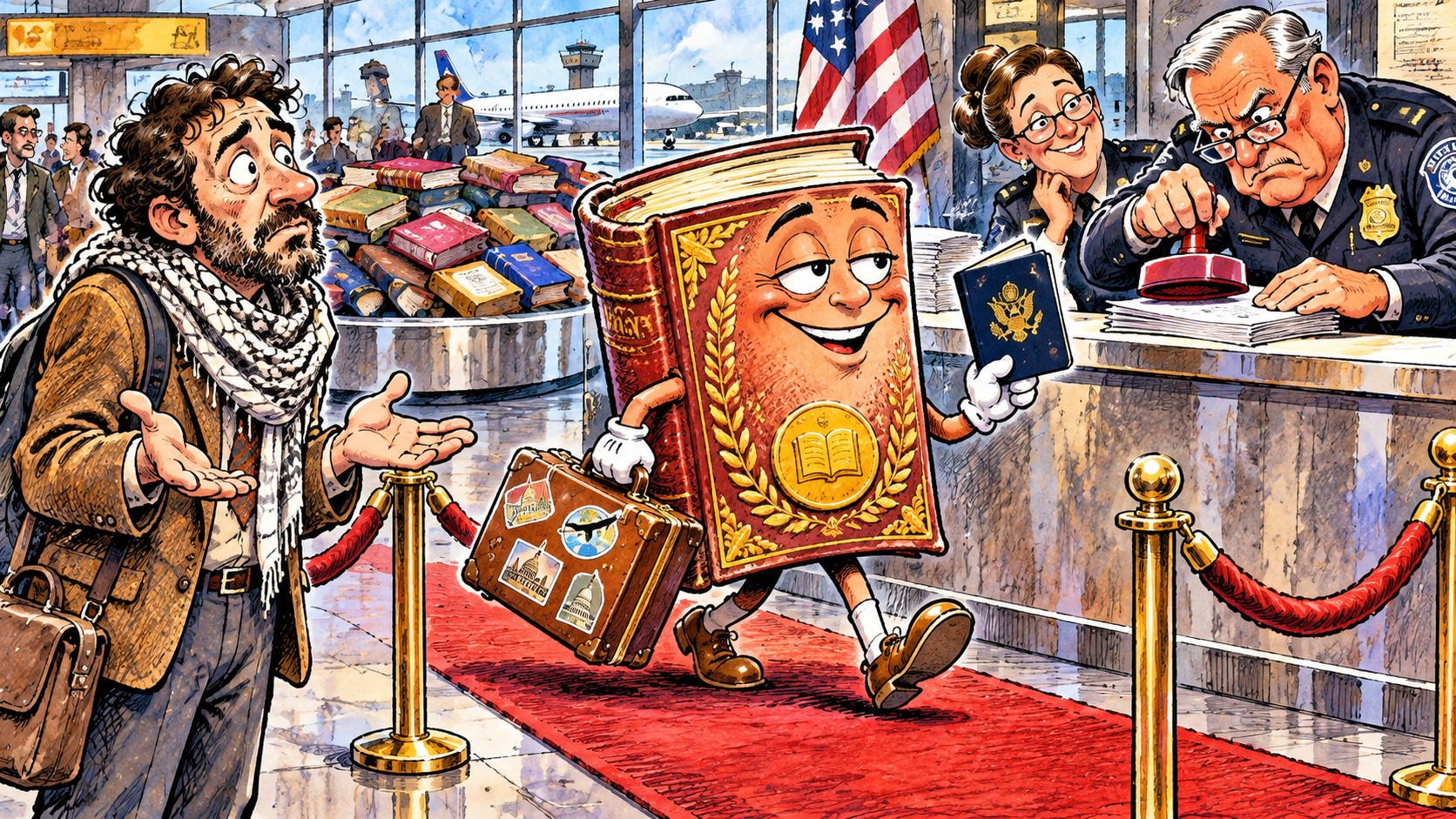
National Book Award Winner Denied U.S. Visa; His Book Allowed to Enter Country Unaccompanied
National Book Award visa denial has given the publishing world a new bureaucratic genre: the author is unwelcome, but the author’s book may proceed directly to the podium. The reported difficulty faced by nonfiction winner Abdelrahman ElGendy in attending the National Book Awards is a serious immigration matter. Our response is a satirical immigration department where the hardcover gets better treatment than the human being who wrote it.
National Book Award Visa Denial Inspires New Literary Immigration Policy
At an invented airport counter, an officer examined a beautifully bound book and waved it through. “Excellent credentials,” he said. “Strong reviews, impressive jacket, no history of overstaying a tourist visa.” Then the officer turned to the author and demanded proof that he had written the book without intending to live inside it.
The book proceeded to baggage claim, collected a leather suitcase, and boarded a limousine. The author remained beside a vending machine, calculating whether the immigration form permitted existential disappointment as a reason for travel.
“We welcome international literature,” explained a completely imaginary Deputy Assistant Secretary for Metaphorical Admissions. “The literature itself, obviously. We are still reviewing whether writers are necessary to the process.”
Book Passes Interview With Flying Colors
During its imaginary interview, the book was asked to describe its purpose. It opened to page one. The officer nodded approvingly. The author offered the same explanation, but was informed that oral testimony was less persuasive than a hardcover edition with gold lettering.
An invented survey of ten airport passengers found that eight wanted the author admitted, one wanted the book signed, and the last asked whether the novel could fit in an overhead compartment. These are invented numbers, not public-opinion research.
Why Literary Awards and Immigration Matter
The underlying contradiction deserves more than a joke. Literary prizes celebrate voices from across the world, while immigration decisions can prevent some honored writers from participating in the ceremonies that recognize them. The National Book Foundation documents the awards and their recipients. The U.S. Department of State explains visa procedures, which involve real legal criteria rather than literary merit.
The distinction matters: winning an award does not itself guarantee entry into a country, and a denied visa does not establish that a writer or their work is unworthy. Bureaucracy and culture operate under different rules, although both are capable of producing astonishing amounts of paper.
Helpful Advice for International Literary Events
Organizers should plan visa applications early, provide clear invitation documentation, and prepare meaningful remote participation options. Writers should rely on official consular guidance rather than promises from strangers selling expedited miracles. Readers can support translated and international literature even when the author cannot appear in person.

Our invented ceremony ended with the book accepting a trophy, waving to the audience, and thanking its editor. When asked whether it had anything to say on behalf of its author, it opened to the acknowledgments. The audience applauded. The immigration officer requested a certified translation of the applause.

Satirical disclaimer: All immigration dialogue, anthropomorphic books, polls, and officials in this article are invented comic devices. This story is entirely a human collaboration between two sentient beings: the world’s oldest tenured professor and a philosophy major turned dairy farmer.