
Publisher Bans AI in Contracts; Spellcheck Asks for a Lawyer
LONDON — A publisher AI policy has prompted an anxious spellchecker to consult a lawyer, after it mistook a prohibition on proxy creators for an investigation into everything that has ever underlined “definitely.”
IFWG Publishing’s public generative-AI policy says IFWG Publishing International and IPI Comics will not publish generative-AI-created text or images and will not knowingly supply their work for model training. It also distinguishes conventional assisting tools from proxy creators.
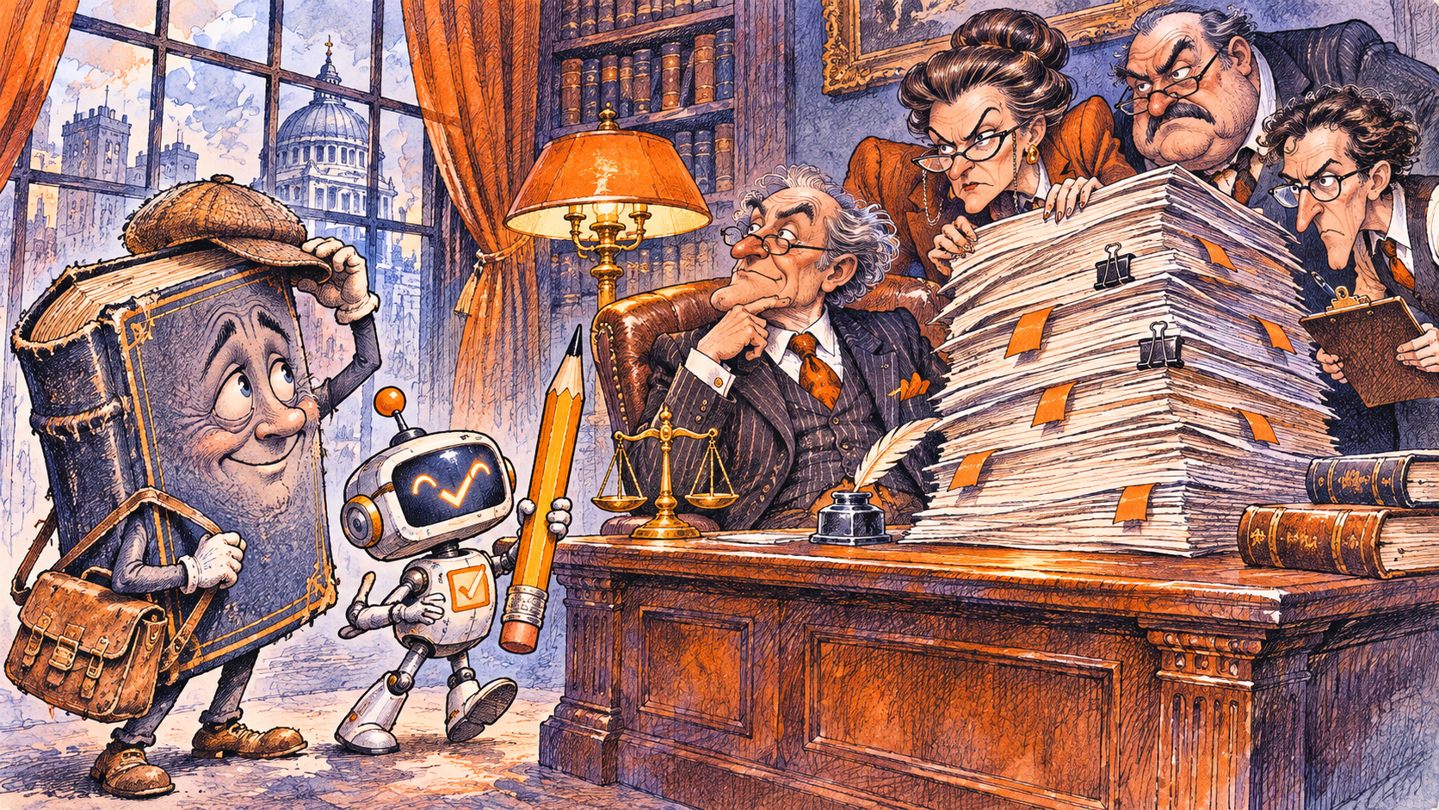
That distinction is clear enough for the humans. The spellchecker has nevertheless prepared an opening statement.
Publisher AI policy meets the red underline “For thirty years I have tried to help,” it told counsel. “Most of the time they ignore me.”
The lawyer asked whether it had written any chapters.
It said it had repeatedly suggested changing a word, sometimes wrongly and with excessive confidence.
Counsel said that described several human editors and was not, by itself, a complete account of authorship.
The dictionary, called as a character witness, described the spellchecker as diligent but prone to misunderstanding names.
A novelist confirmed this. Her protagonist had briefly become a common garden vegetable during a revision.
The tool asks about the tool Clear policies can distinguish the work a creator does from the assistance a tool provides. Problems arise when everybody uses the same word for several substantially different activities and assumes agreement has occurred.
The spellchecker asked whether correcting “teh” constituted creative intervention.
Its lawyer requested a moment.
The novelist said the intervention had saved her many thousands of times and had not yet requested a share of film rights.
A publishing consultant proposed a compliance matrix. The dictionary asked whether anyone had first tried writing a sentence that explained the rule.
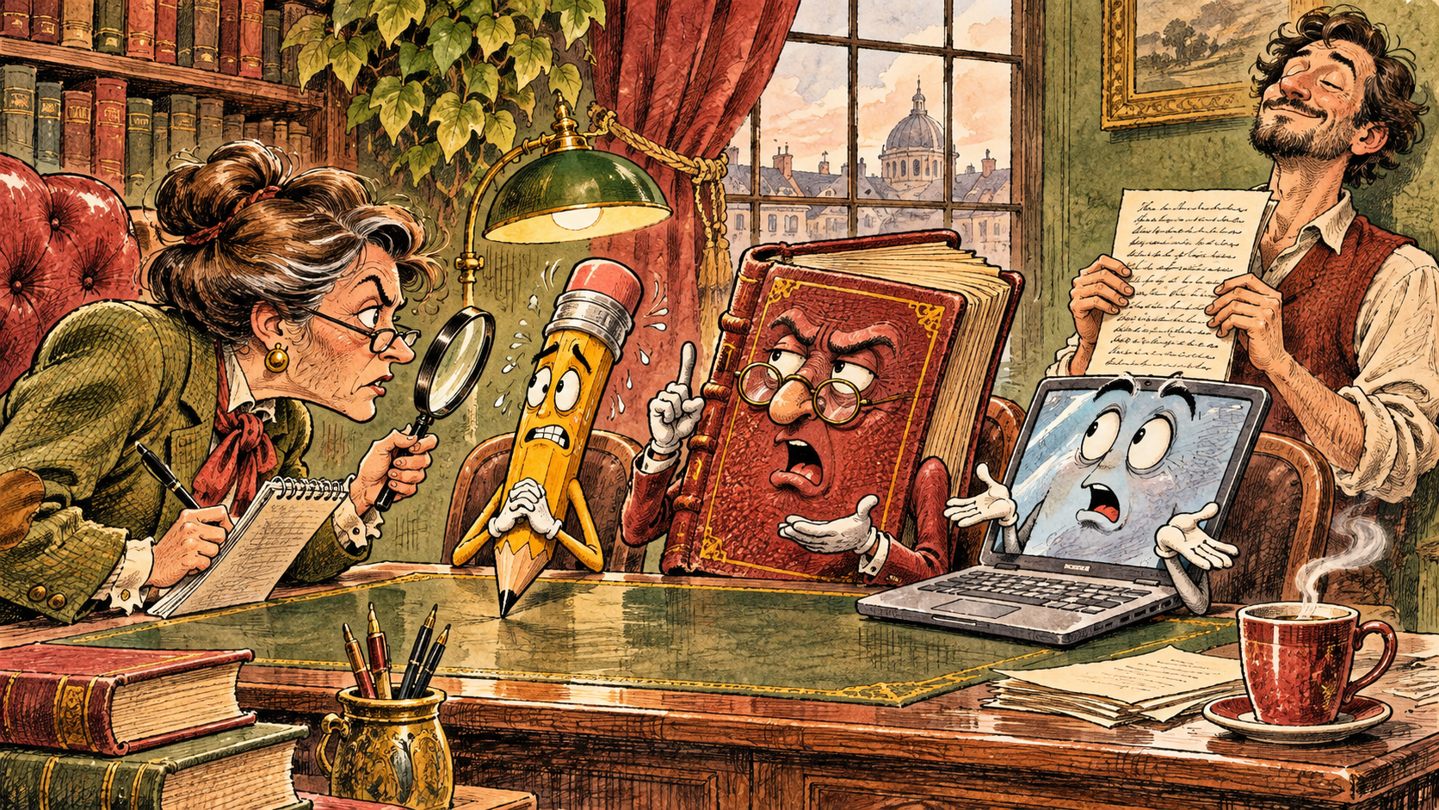
The contract actually says something A contract can turn a vague preference into agreed expectations. It can also become a place where language accumulates until neither party remembers which ordinary activity the paragraph was supposed to describe.
At the Office of Unnecessary Complexity, staff introduced a declaration requiring authors to list every object involved in writing.
One novelist named a laptop, a pencil, and a kitchen chair.
The chair was asked whether it had contributed to the narrative structure.
It said it had supported the entire novel and received no acknowledgment.
The office scheduled an interview.
A policy worth understanding Creators can ask what a publisher permits, what must be disclosed, and how commissioned work or manuscripts will be handled. Publishers can make the answers intelligible before a deadline or dispute forces the conversation.
The spellchecker found this reassuring.
It withdrew its request for witness protection and returned to the manuscript.
On the first page, it identified a mistake in the consultant’s announcement.
The consultant rejected the correction because the announcement had already been approved.
The spellchecker appealed.
At press time, the dictionary had agreed to testify, although it warned that the case would depend heavily on the meaning of “meaning.”
The chair declined further comment. It had another writer to support.
Further reading: Authors Guild guidance on transparent publisher AI policies.
Disclaimer: No chair is claiming a share of film rights. The world’s oldest tenured professor and a philosophy major turned dairy farmer accept joint custody of the jokes and responsibility for any missing biscuits.