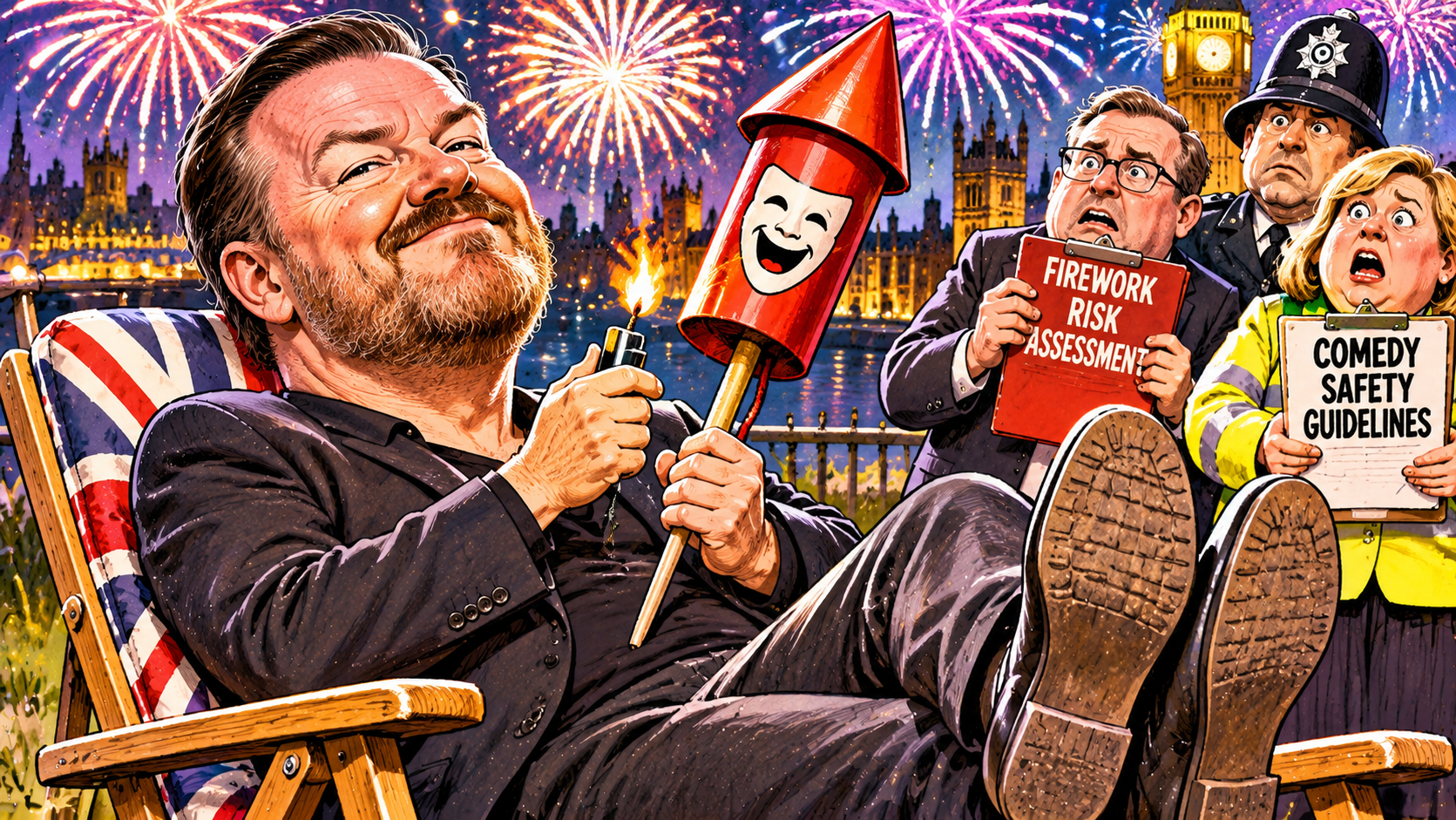
Ricky Gervais Fireworks Complaint Leaves London’s Loudest Profession Seeking Earplugs
Ricky Gervais fireworks controversy: A professional provocateur objects to fireworks, proving that everyone eventually discovers a noise they did not personally authorize. It is a remarkable achievement of modern entertainment that something meant to be enjoyable now comes with more administrative baggage than a transatlantic flight.
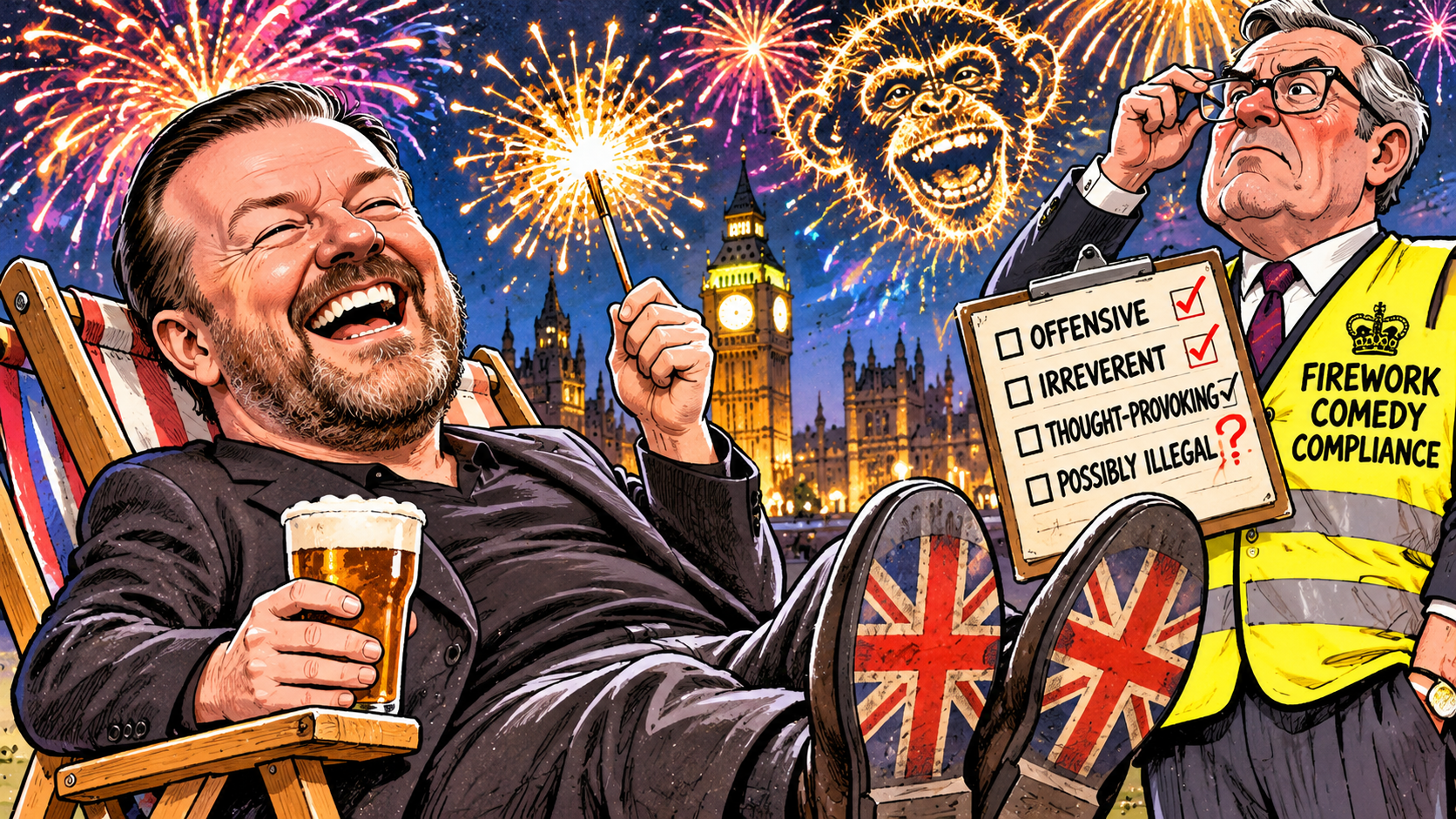
Ricky Gervais fireworks controversy: The Industry Calls an Emergency Meeting
At a make-believe neighborhood meeting, the loudest speaker demanded that the room respect his right to peace and quiet. The statement was delivered with absolute seriousness, which is how the audience knew it was expensive. An accountant raised a hand and asked what problem the meeting was supposed to solve. Nobody remembered, but everyone agreed the refreshments were excellent.
An imaginary dog owner testified that her terrier had hidden beneath a sofa while the local comedian was still composing his complaint. The account caused widespread concern among the imaginary panel, which voted to commission a further study rather than speak to another ordinary human being.
Ridiculous Statistics From an Entirely Unofficial Survey
A comic survey found that 99 percent of pets dislike unexplained explosions and 100 percent of fireworks decline to respond to criticism. A statistics professor who exists only for purposes of this article declared the results conclusive. His methodology involved asking the nearest people until somebody agreed with him. The university immediately offered him a visiting fellowship.
The local council proposed replacing fireworks with silent mime, but mime performers immediately requested hazard pay. The proposal was praised for its innovation, particularly by consultants who had already printed invoices. A junior employee suggested simply solving the problem. This was ruled out because the solution did not require a branded conference.
What Ricky Gervais fireworks controversy Reveals About Entertainment
There is a legitimate question buried beneath the comedy. Audiences pay money, spend time and place trust in people who sell them stories or performances. They deserve clear information, proportionate prices and an opportunity to make up their own minds. A public controversy is not automatically proof of wrongdoing, and a popular performer is not automatically right about everything.
There are genuine animal-welfare and public-safety concerns about fireworks, whatever a celebrity’s views may be. Useful background is available from this institutional reference and this independent authority. The references are offered for factual context, not as endorsements of any invented incident in this article.
The Committee Reaches a Decision
By late afternoon the emergency panel had produced a motion, an amended motion and a request for a larger room. Someone suggested that comedy ought to make people laugh. The chair called that an outdated standard, reminding members that engagement could now be measured in outrage, clicks and the number of people arguing about a headline they had not read.
Outside the conference room, two strangers shared an actual joke. They laughed, went about their day and forgot to monetize the experience. The industry is still investigating how such a catastrophic loss of potential revenue could have occurred.
Disclaimer: Satire. All committee meetings, surveys, quotes and eyewitness accounts above are invented comic devices, not factual allegations. Entirely human collaboration between the world’s oldest tenured professor and a philosophy major turned dairy farmer.