
AI Book Covers Prompt Publishers to Demand a Pencil’s Employment History
NEW YORK — Concern about AI book covers has reached the stationery cupboard, where publishers are now asking pencils to account for unexplained gaps in their employment history.
The latest real controversy concerns the revealed cover of Ilona Andrews’ This Crown Will Not Rule Me. In Ilona Andrews’ statement on the withdrawn cover, the authors shared Tor’s acknowledgment that generative AI had been used without the knowledge of Tor or the authors, despite contractual prohibitions. The imagery was withdrawn. The resulting question is how a prohibition becomes a process that actually notices something.
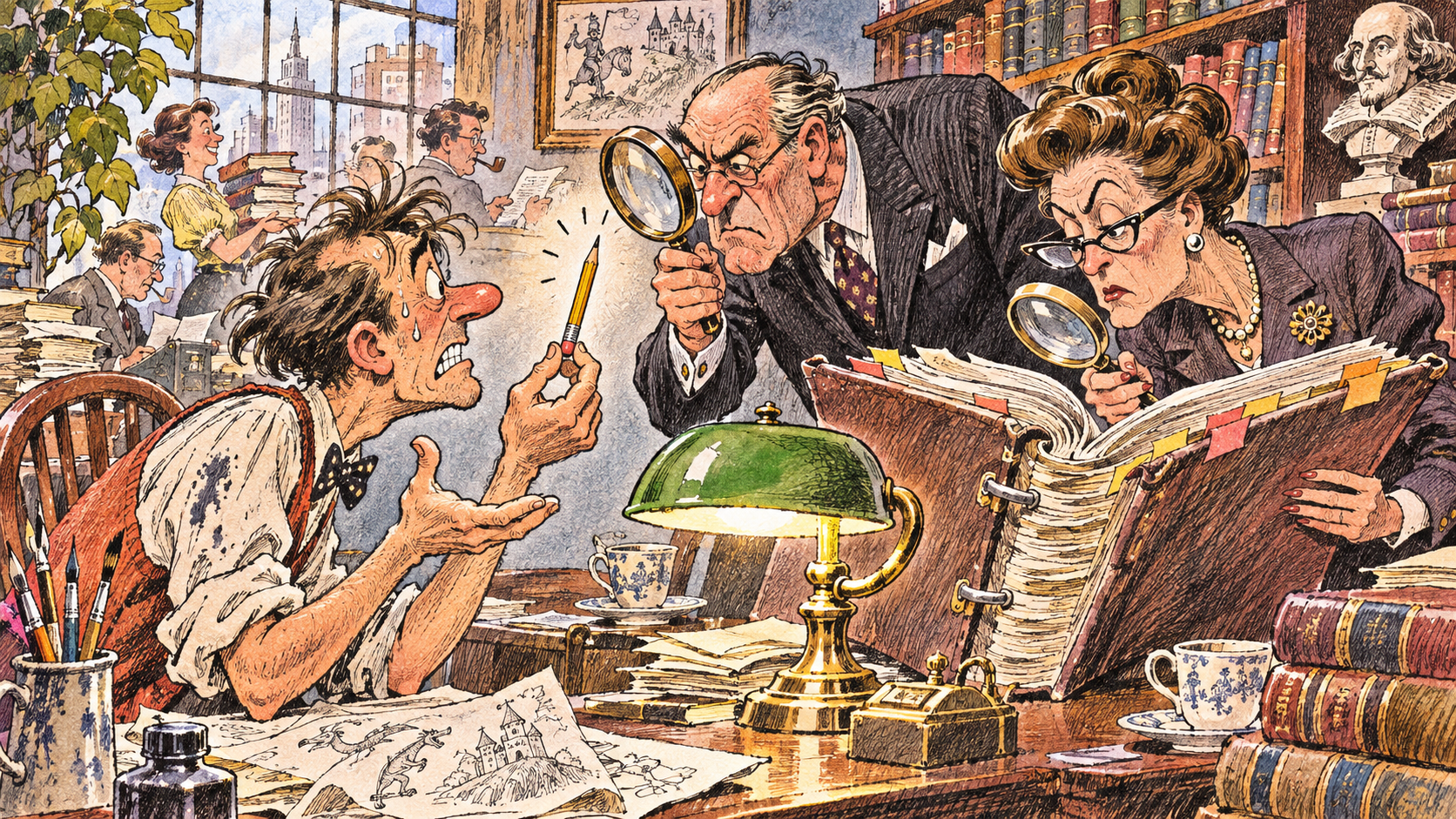
At the firm Pencil & Promise, the answer is a seventeen-page artist questionnaire and a conference room large enough to interrogate an eraser.
AI book covers meet the evidence folder “We need proof of human involvement,” explained art director Celia Blot. “Preferably a receipt for the human.”
An illustrator supplied sketches, layers, reference photographs, and the jacket he had ruined with blue paint. Legal asked whether the jacket had a chain of custody. Marketing asked whether the stain came in a warmer palette.
The artist then produced an actual pencil. Three executives leaned backward.
“Did you make that line,” asked the compliance officer, “or did the pencil merely assist your workflow?”
The pencil declined to comment, citing its increasingly narrow point.
An audit of the imagination Book jackets already perform an ambitious task: persuading strangers that a rectangle contains the precise emotional experience they need. They must suggest originality while resembling the last rectangle that sold well.
Now the team must also determine whether the misty castle emerged from an artist’s imagination or an unhelpfully enthusiastic machine. The castle has become the most heavily documented property in fantasy.
A staff member proposed asking the artist directly. Management liked the concept but worried that it lacked the reassuring expense of a platform.
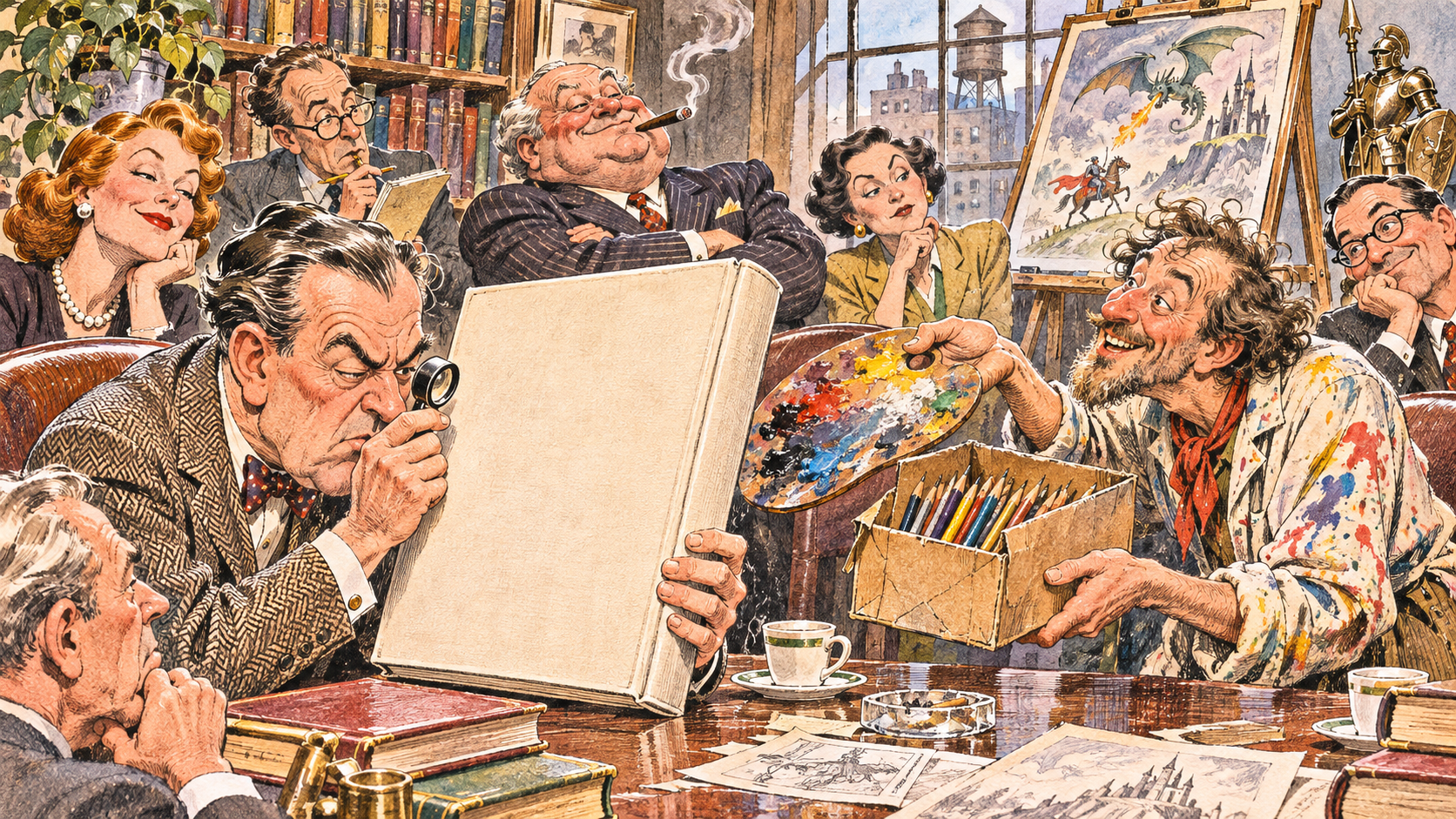
The dragon’s hands require a meeting The new review committee will inspect suspicious shadows, decorative flourishes, and anything management calls “a vibe.” A dragon with the correct number of limbs remains under suspicion for looking overly confident.
Blot warned that visual hunches are not conclusive evidence. This disappointed the senior executive whose entire career was built on pointing at things and saying they felt off.
An office poll gave the preferred solution as “hire someone good and communicate clearly.” It finished behind “add another approval stage,” which received six votes from the six people whose jobs involved approving stages.
The contract becomes tangible Illustrators welcomed serious provenance questions, although they preferred receiving them before the deadline became yesterday. Keeping drafts and agreeing expectations can help establish a workable record. Demanding that a watercolor produce its childhood school reports cannot.
The publisher promised a balanced policy. Artists must demonstrate that every mark was made appropriately, while executives may continue saying “make it pop” without explaining where that phrase originated.
At the final meeting, the pencil was cleared for use. Its sharpener remained on administrative leave.
The artist asked whether anyone wanted to discuss the actual story the cover was meant to represent. A marketing director checked the agenda.
“That,” she said, “is an excellent idea for the paperback.”
Further reading: Authors Guild guidance on publishing transparency.
Disclaimer: No pencil was required to testify against its sharpener. The world’s oldest tenured professor and a philosophy major turned dairy farmer accept joint custody of the jokes and any unclaimed biscuits.