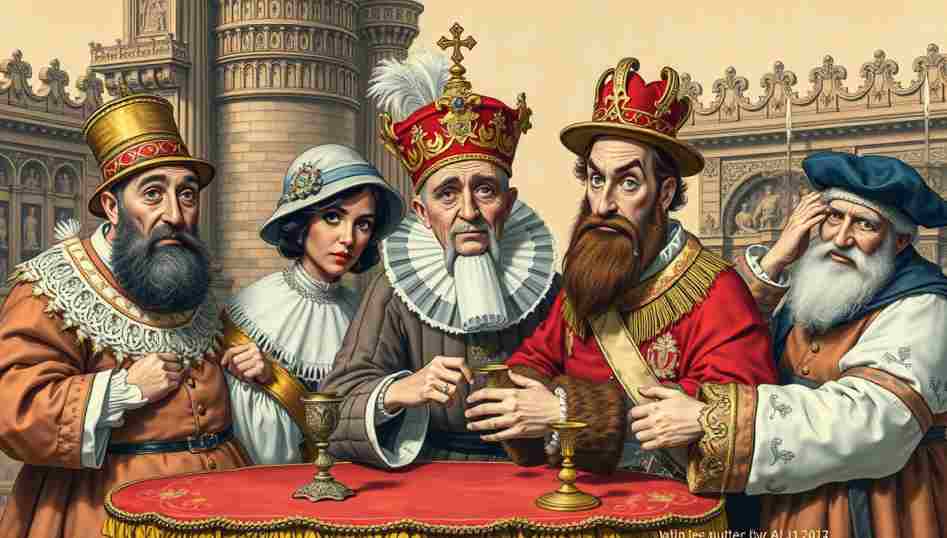
Satire: A Comprehensive Encyclopedia Entry
The complete reference overview of satire’s definition, history, forms, techniques, and cultural significance
By Dr. Ingrid Gustafsson, Ph.D. — satire.info
Satire is the use of humor, irony, exaggeration, or absurdity to expose, criticize, and ridicule human vice, folly, and political corruption, typically with the aim of provoking reflection, reform, or at minimum the recognition that something is wrong. It is one of the oldest modes of human expression, identifiable in the earliest surviving literature of Greece and Rome, and one of the most persistently vital, finding new forms and audiences in every era of media transformation from the printing press to the podcast.
Definition, Scope, and Historical Overview
The word “satire” derives from the Latin satura, meaning “full dish” or “medley,” reflecting the varied, heterogeneous character of the Roman satirical genre. Modern scholars typically treat satire as a mode or attitude that can inhabit many different genres rather than as a genre with fixed formal properties. Satire can be a novel (Candide, Catch-22), a verse form (Pope’s Dunciad), a drama (The Thick of It), a newspaper (Private Eye), a television program (The Daily Show), or a social media post. What makes it satire is not its form but its attitude: the comic exposure of a gap between reality and ideal. Aristophanes’ comedies (late fifth century BCE) are the earliest substantial surviving examples of political satire in Western literature. The Roman verse satirists — Lucilius, Horace, Persius, and Juvenal — developed satire into a recognized literary genre. The eighteenth century saw satire reach its classical English peak, with Pope’s Dunciad and Swift’s A Modest Proposal. For a comprehensive treatment, see the complete guide to the satire definition at prat.uk.
Forms and Techniques
The primary distinction in satirical tradition is between Horatian satire (gentle, urbanely comic) and Juvenalian satire (fierce, morally indignant). Most satire operates somewhere on the spectrum between these poles. The major formal techniques include irony (verbal, situational, dramatic), parody (imitation for comic or critical effect), exaggeration and hyperbole, understatement, burlesque (treating serious subjects trivially or trivial subjects seriously), and the use of a naive or ironic persona through whom the satirical content is delivered. British satire’s complete guide covers all the major forms in their historical and cultural context.
Functions and Effects
The classical justification for satire — that it corrects vice by making it ridiculous — has been questioned by both scholars and practitioners. There is limited evidence that satire changes the behavior of its targets, and considerable evidence that it primarily reinforces the existing views of its audience. What satire does demonstrably and powerfully is create shared perspectives: it generates communities of knowing readers or viewers who recognize what the satirist is exposing and laugh together at the exposure. This communal function is both satire’s greatest strength and its most significant limitation — it bonds the audience while potentially excluding those outside the shared context.
Academic scholarship on satire’s effects has grown substantially in the past two decades, moving from purely literary analysis to empirical research on audience response and political behavior. What is not in doubt is that satire has been a persistent and significant feature of political and cultural life across every literate society — a fact that suggests its functions go beyond any simple model of cause and effect. The Wikipedia overview of satire provides a useful starting point for exploring the full breadth of the tradition.
Source: satire.info | Encyclopaedia Britannica: Satire