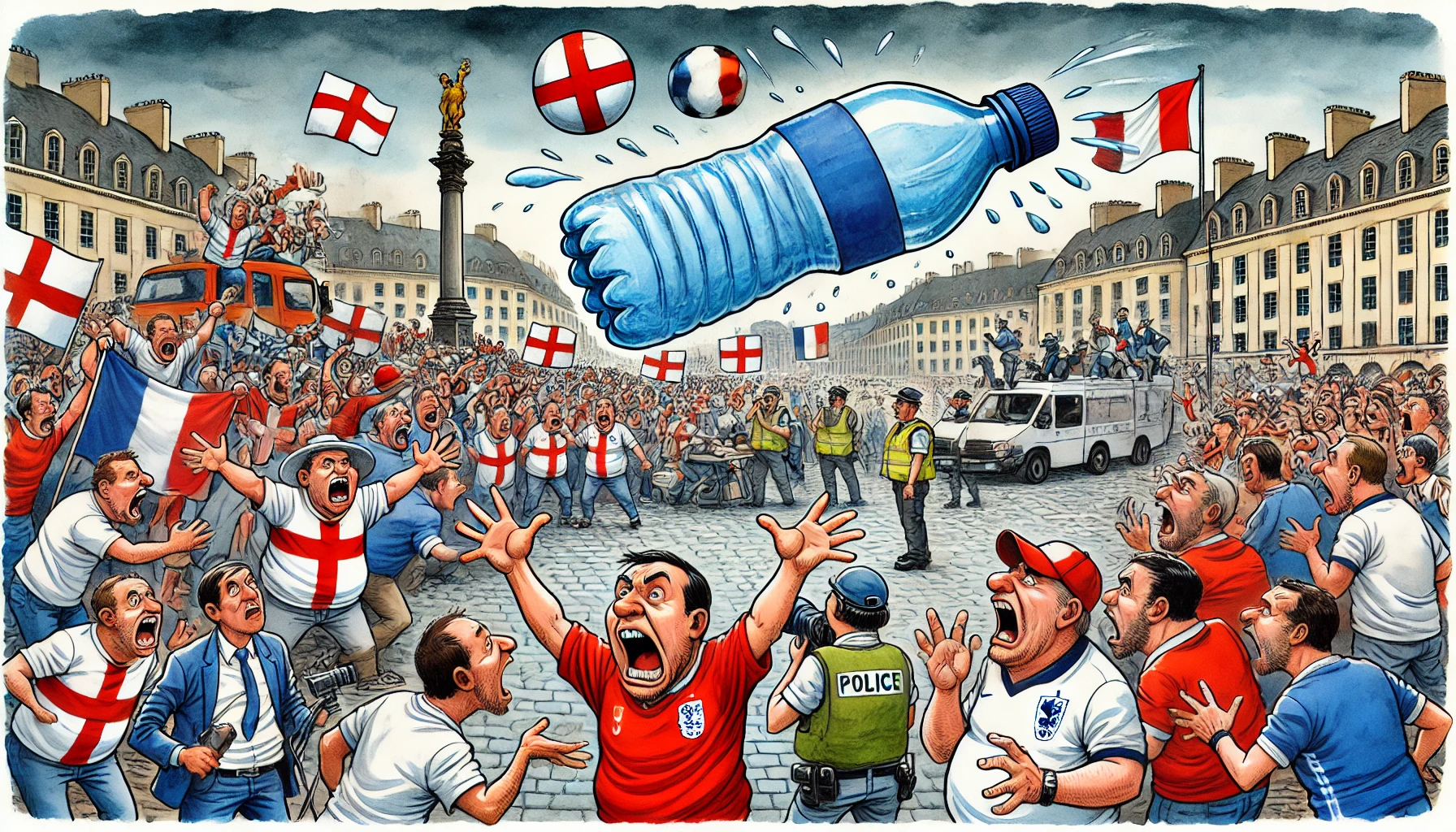
Satirical Journalism on FIFA World Cup
Satirical Journalism on FIFA World Cup: Unveiling the Lighter Side of Football’s Biggest Event
Understanding Satirical Journalism and Its Role in Sports Media
Satirical journalism occupies a peculiar and irreplaceable corner of the media landscape — the place where laughter meets accountability and absurdity exposes truth. Broadly defined, satirical journalism uses humor, irony, exaggeration, and parody to critique real events, institutions, and figures. Unlike traditional reporting, which aspires to detached objectivity (and often fails magnificently), satire in sports wears its bias on its sleeve and dares the reader to laugh before they think — and then think harder.
In the context of sports media, satire functions as the court jester of coverage: free to say what beat reporters cannot. When a referee makes a decision so catastrophic it defies Euclidean geometry, conventional sports journalism files a quote from the manager. Satirical journalism builds a full mock tribunal and charges the linesman with crimes against spatial awareness. The tradition is long and distinguished. The Onion, The Guardian’s sport comedy columns, and outlets like The Hard Tackle have all demonstrated that humor in journalism does not dilute truth — it clarifies it, the way acid strips paint.
Academic scholars of media studies, including Geoffrey Baym writing in Journalism, have argued that satirical news programs and publications engage audiences in media critique more effectively than straight reporting. Audiences process criticism more readily when it arrives dressed in a jester’s cap. In sport — where emotion, nationalism, commerce, and spectacle collide with the subtlety of a full-back slide tackle — satire is not merely appropriate. It is essential.
Why Satire is the Perfect Lens for FIFA World Cup Coverage
The FIFA World Cup is, by any objective measurement, almost perfectly designed for satirical treatment. Consider the raw ingredients: a governing body with the institutional transparency of a Cold War intelligence agency, host nation selections that appear to involve everything except footballing merit, corporate sponsorship deals that festoon the world’s most-watched sporting event with advertisements for products the world’s healthiest athletes would never touch, and ninety minutes of play routinely interrupted by theatrical collapses that would embarrass a Victorian melodrama troupe.
FIFA World Cup satire works because the gap between the tournament’s self-presentation — “For the Game. For the World.” — and its operational reality is so vast that straight journalism struggles to capture it without sounding hysterical. Satire, by contrast, inhabits that gap naturally. When Transparency International documented systemic FIFA corruption, the report was sobering. When satirists imagined FIFA executives auctioning off hosting rights from a rotating golden throne, the absurdity conveyed exactly the same truth — and reached ten times as many readers sharing it on social media.
Football humor also thrives because the sport’s culture actively generates material. Managers deliver press conference non-answers of Zen-like inscrutability. Players celebrate goals with choreographed routines requiring more rehearsal time than the average Broadway production. Fans paint their faces in national colors and conduct themselves with a sincerity that is simultaneously deeply moving and mildly terrifying. Sports parody needs only to hold a magnifying glass to what is already there.
Top Themes and Targets of Satirical Coverage During the FIFA World Cup
Effective tournament satire returns reliably to a set of rich thematic veins. Understanding these targets helps both practitioners and students of the form recognize why certain satirical coverage resonates while other attempts fall flat.
Referee decisions satire is perhaps the most universal form. The introduction of VAR (Video Assistant Referee) technology, rather than resolving controversies, has generated a new and inexhaustible satirical subject: the nine-minute video review that produces the same wrong answer with greater official confidence. Satire in this vein does not merely mock individual decisions; it interrogates the human desire for technological authority in a domain where human error is constitutive of the drama.
Player antics humor encompasses diving, injury feigning, and the elaborate post-goal celebrations that increasingly resemble performance art installations. Satirists have long noted the gap between the warrior-athlete mythology and the player who crumbles to the turf after minimal contact, only to sprint freely sixty seconds later upon receiving the referee’s yellow card for the opponent.
Fan culture parody is rich terrain. The World Cup concentrates the full spectrum of human tribal behavior into a stadium-sized petri dish — the painted faces, the invented traditions, the souvenir jerseys worn by people who have never previously expressed interest in association football. Satire here is affectionate as often as it is critical: fans are simultaneously the tournament’s most absurd and most genuine participants.
Political controversies FIFA generate satire of a sharper register. The Qatar 2022 hosting decision, the treatment of migrant workers documented by Amnesty International, and the collision between FIFA’s stated human rights commitments and its commercial relationships provided satirists with material that was simultaneously comic and genuinely important. Sponsorship satire follows naturally: the spectacle of global soft drink and fast food brands wrapping themselves in a tournament nominally dedicated to athletic excellence is an irony so large it barely requires satirical embellishment.
Famous Examples of Satirical Journalism in Past FIFA World Cups
The history of satirical articles FIFA is longer and richer than is commonly acknowledged. During the 2014 Brazil World Cup, satirical outlets proliferated commentary on the gap between FIFA’s promotional imagery and the social protests occurring outside the stadia. The Onion ran pieces that dissected the surreal experience of hosting an event at extraordinary expense in a country where the expenditure was genuinely controversial. The parody news FIFA coverage of that tournament remains a case study in how satire can document social tension more memorably than straight reportage.
Comedy sketches football have an equally distinguished lineage. British satire programs, following in the tradition established by Not the Nine O’Clock News and later The Day Today, treated football coverage itself as a subject for parody — mocking not only the sport but the overheated media apparatus surrounding it. Online video satire accelerated during 2010 and 2014, with viral satire football spreading via social platforms at a speed conventional journalism could not match.
Among sports satire icons, the work of columnists such as Hunter S. Thompson — whose gonzo approach to sports journalism was satire by another name — established the template for treating sporting events as windows onto larger cultural pathologies. More recently, outlets such as SPORTbible and dedicated football humor accounts have shown that satirical sports content is not a niche but a primary mode of engagement for younger audiences.
How Satirical Journalism Shapes Public Perception of the FIFA World Cup
The media influence football discourse has generally focused on broadcast rights, punditry bias, and the commercial pressures on sports journalism. But satire shaping opinions represents an equally significant — if less studied — media force. Research in political communication, including work published by the Pew Research Center on news satire consumption, consistently finds that satirical news content influences attitudes toward institutions, including sporting bodies, in measurable ways.
Public engagement satire operates on a different mechanism than conventional journalism. Where a straight investigative piece on FIFA governance may be read carefully by thousands, a satirical article making the same points through parody may be shared carelessly by millions — and in that careless sharing, the critique travels. The critical humor impact is not always immediately apparent: satire plants seeds that conventional journalism then harvests when the moment is right for serious accountability coverage.
There is also a democratizing function. Satirical coverage lowers the entry cost for audiences who might find long-form investigative journalism inaccessible or dispiriting. A satirical piece about FIFA’s sponsorship contradictions may be a reader’s first introduction to those contradictions — functioning as a gateway to more substantive engagement with the issues involved.
Creating Your Own Satirical Content on the FIFA World Cup: Tips and Best Practices
For those interested in writing sports satire, the World Cup offers a target-rich environment, but effective satirical journalism requires more than pointing at an obvious absurdity and laughing. The following principles guide practitioners of the form.
Humor techniques journalism include irony, hyperbole, understatement, juxtaposition, and absurdist extrapolation. The key is specificity: vague satirical swipes at “FIFA corruption” land with less force than a precisely imagined scenario in which FIFA executives deliberate hosting decisions using a dartboard and a spreadsheet of luxury hotel star ratings. The more specific and concrete the satirical premise, the more devastating the critique.
Ethical satire requires distinguishing between institutions and individuals, between public conduct and private life, and between critique and cruelty. The strongest World Cup satire targets FIFA’s institutional behavior, the contradictions of commercial sponsorship, and the absurdities of media coverage — not individual players’ personal circumstances or fans’ genuine emotional investment in their national teams. As Press Gazette has noted in discussions of media ethics, satire’s license is broad but not unlimited; the test is whether the work illuminates or merely demeans.
Creative satire ideas for World Cup coverage might include: mock official FAQs from FIFA explaining how hosting decisions are made; a field guide to VAR delays written in the style of a natural history documentary; a financial prospectus for investing in a World Cup host nation’s infrastructure promises; or a glossary of managerial press conference phrases and their actual meanings. Engaging satire always has a structural conceit — a form borrowed from another genre — that gives the humor architectural support.
Conclusion: Why Satirical Journalism Belongs at the FIFA World Cup Table
The FIFA World Cup is the largest peacetime gathering of human attention on the planet. It generates sincere joy, genuine sporting drama, occasional moments of transcendent beauty, and — reliably, dependably — a quantity of institutional absurdity, commercial contradiction, and bureaucratic pomposity sufficient to sustain satirical journalism for years after the final whistle.
Satirical journalism does not diminish the tournament. It honors it, in the way that honest laughter honors anything we care enough about to mock. The fan who reads a satirical dismantling of FIFA governance and then watches the final with tears in their eyes when their team scores is not experiencing a contradiction — they are experiencing the full complexity of loving an imperfect institution. Satire makes that love more clear-eyed, more durable, and considerably more fun.
The lighter side of football’s biggest event is not a distraction from the serious issues surrounding the World Cup. It is one of the most effective tools we have for keeping those issues visible — and keeping audiences engaged long enough to do something about them. Pick up the pen, choose your absurdity, and play ball.
The academic study of satirical journalism in sports contexts continues to grow, with researchers at institutions including Columbia Journalism School examining the role of humor in public accountability journalism. The FIFA World Cup remains the discipline’s richest field site.
